
On this page
I’ve spoken to dozens of people who want to start an online store but hit the same wall early on: where do I actually get products from?
They look at Shopify, they get excited. Then they search for suppliers and suddenly the whole thing feels overwhelming. Should I use Alibaba? AliExpress? What is the difference? Can Alibaba even dropship?
This guide answers all of that. I will walk you through how Alibaba and AliExpress work for dropshipping, how to find products worth selling, how to vet suppliers, and how to build a Shopify store around it.
Let us get into it.
What Is Alibaba Dropshipping and Does Alibaba Support It?
Alibaba is a B2B wholesale marketplace. It was founded in 1999 and has grown into one of the largest sourcing platforms in the world.
The common misconception is that Alibaba is only for bulk buyers. Alibaba now maintains a dropshipping marketplace, but minimum orders and fulfillment terms still vary by listing and supplier. Confirm that a supplier accepts individual orders before building a store around its products.
So yes, you can use Alibaba for dropshipping. But it takes a bit more setup than plug-and-play platforms like AliExpress. You need to message suppliers, confirm they accept single-unit orders, and build a clear agreement around fulfillment. It is a bit more work upfront, but the payoff is lower product costs and the ability to negotiate custom branding.
Alibaba vs AliExpress: Which Is Better for Dropshipping?
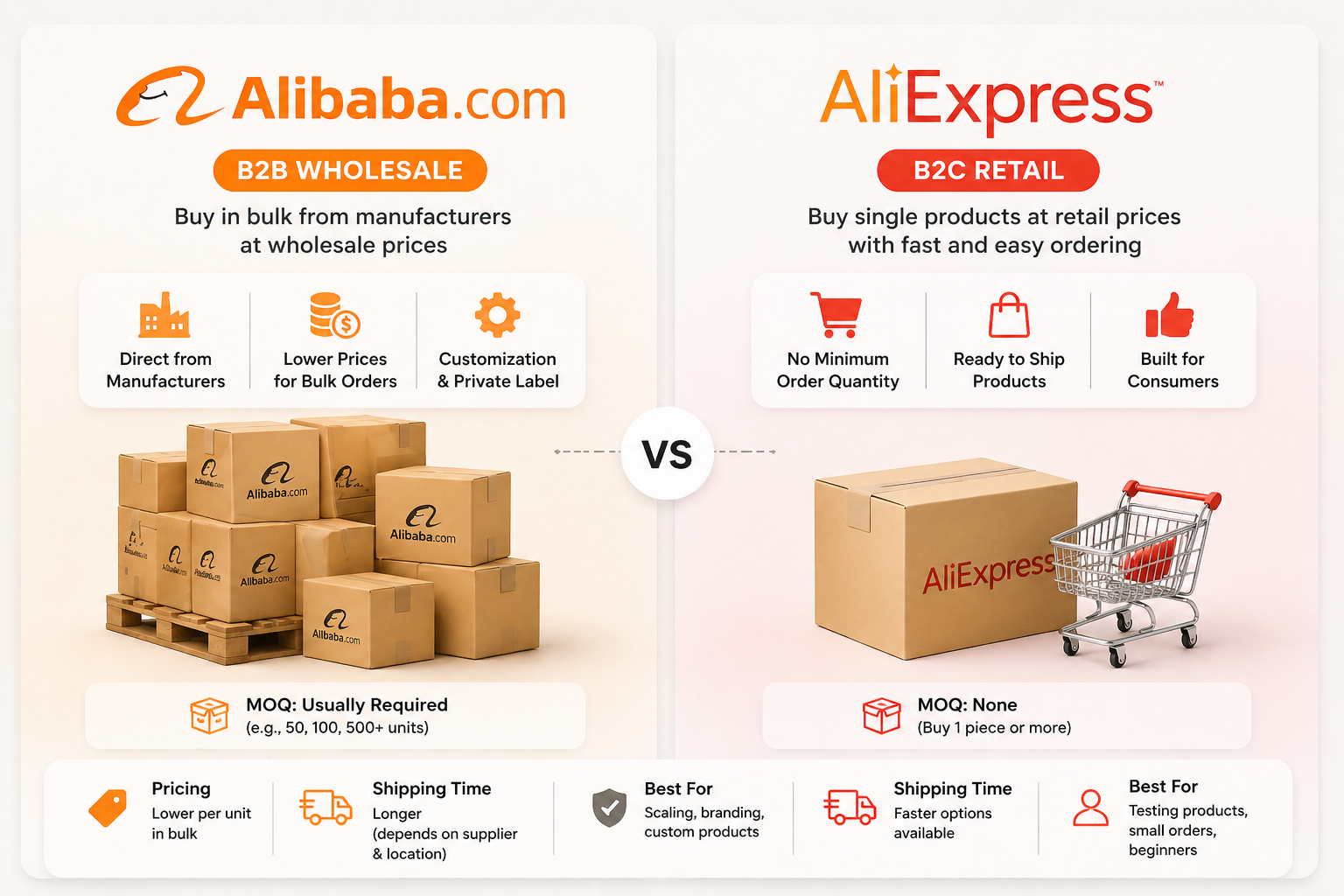
This is one of the most searched questions on the topic, and the honest answer is: it depends on where you are in your business.
AliExpress is the consumer-facing sister platform to Alibaba. It was built for individual product purchases with no minimum order quantity. Most sellers there are already set up to handle dropshipping orders, which makes it a much smoother entry point for beginners. You get faster access to products, built-in dropshipping tools, and integrations with apps like DSers that automate the whole order process.
Alibaba, on the other hand, connects you directly with manufacturers. Prices are closer to factory rates. Customization is possible. You can negotiate terms. But most suppliers expect bulk orders by default, and you will need to do some digging to find the ones willing to fulfil single-item orders.
Here is how I think about it. Use AliExpress to test products quickly and start getting orders. Once you know what sells, use Alibaba to source the same product at a lower cost, potentially with your own branding. The two platforms work better together than separately.
| Marketplace | MOQ | Unit cost | Setup effort | Dropshipping readiness | Automation | Negotiation | Private labeling | Best stage |
|---|---|---|---|---|---|---|---|---|
| AliExpress | Usually supports single-item purchases | Generally higher per unit | Lower | Many ready-to-ship listings | Supported by Shopify connector apps such as DSers | Limited | Supplier-dependent and less common | Testing products and starting out |
| Alibaba | Varies; many listings still require minimum orders | Closer to wholesale or manufacturer pricing | Higher | Use dropshipping listings and confirm terms with each supplier | Available through compatible third-party connectors | Common for price and fulfillment terms | More customization and packaging options | Scaling validated products and building a private label |
How to Set Up Your Alibaba Dropshipping Account
Getting started on Alibaba is straightforward. Go to Alibaba.com and click the “Join Free” button in the upper right corner. Fill in your name, email, country, and trade role. Select “Buyer” since you are sourcing products.
Once your account is set up, head to the dedicated dropshipping marketplace and search your niche. Look for low minimum-order listings and ready-to-ship products, but confirm single-item fulfillment, shipping, packaging, returns, and stock synchronization directly with each supplier.
If you use Shopify, select a connector whose current listing explicitly supports the marketplace and workflow you need. For example, the current DSers Shopify listing describes product sourcing, listing, ordering, and tracking synchronization across AliExpress, Alibaba, and other supported sources. Review its current features and fees before installing.
How to Set Up an AliExpress Dropshipping Account and Use the Dropshipping Center
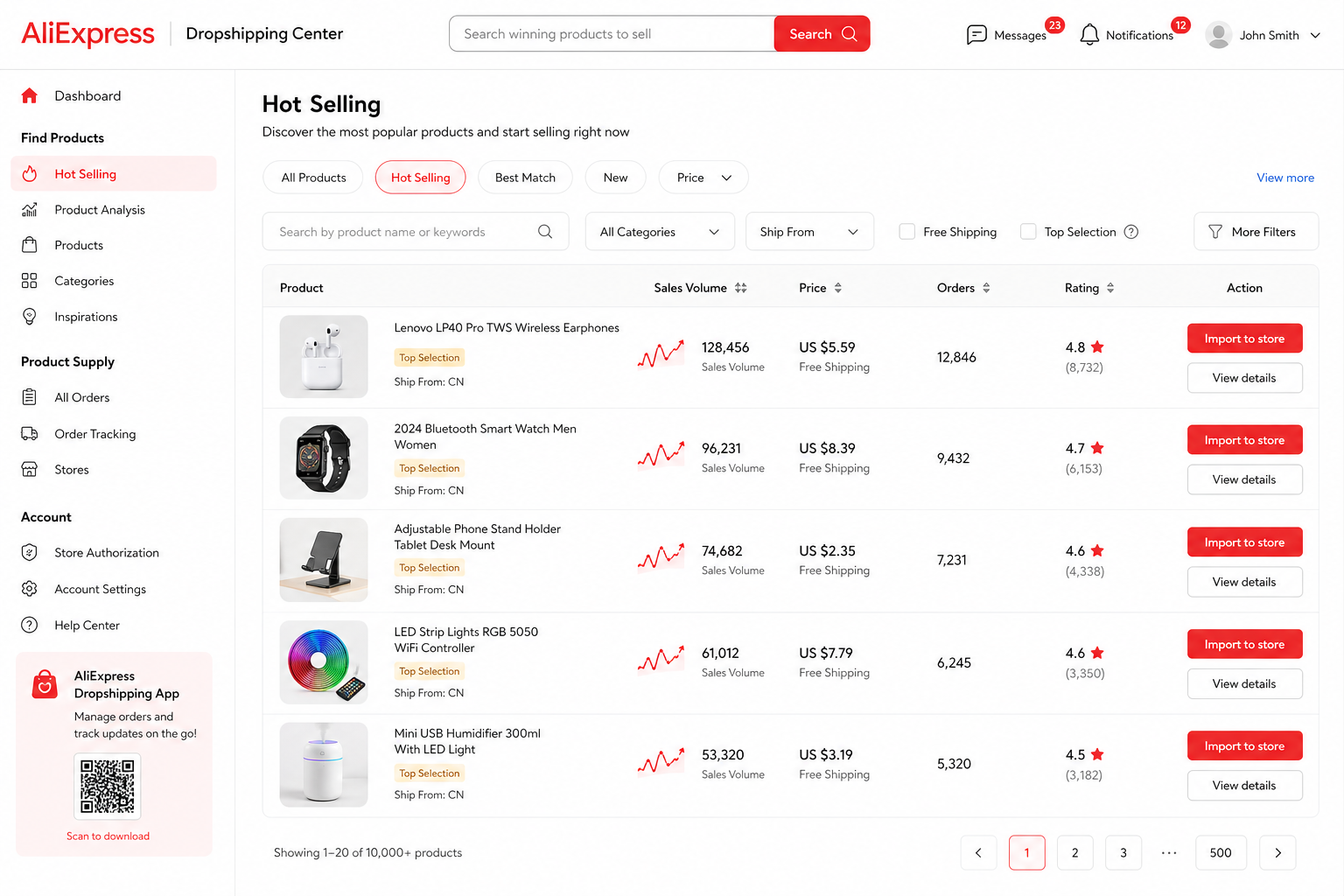
If you are starting with AliExpress, the setup is simpler. Create an account at AliExpress.com using your email or a Google account. Once you are logged in, access the AliExpress Dropshipping Center (also called DS Center) at ds.aliexpress.com.
The Dropshipping Center is a free tool built directly into AliExpress. It is one of the most underused features I see new sellers ignore. Here is what it actually gives you:
Product Search (Hot Selling Tab): Browse products by niche category with data on order volume, shipping reliability, and seller ratings. You can filter by price range and delivery time. This tells you what is already selling before you list anything in your store.
Product Analysis: Paste any AliExpress product URL into the analysis tool and get a sales volume graph over time. You can see whether a product is trending up, peaking, or already declining. That one feature alone helps you avoid wasting money on a dying product.
Search by Image: Upload a photo of a product and find matching or similar items from AliExpress suppliers. Useful when you spot something selling well elsewhere and want to find the source.
Access and naming can vary by account and region. If the direct page is unavailable, connect AliExpress through a supported tool such as DSers and use the product-research features available to your account.
Once you are in, use the available product recommendations and analysis data as one research signal. Validate the product independently and investigate the supplier rather than treating marketplace popularity as proof that it will sell in your market.
How to Find Winning Products on Alibaba for Dropshipping
Finding products on Alibaba requires a slightly different approach compared to AliExpress. Here is the process I recommend.
Start with the Alibaba dropshipping marketplace and run a keyword search for your product category. Confirm the listing’s minimum order and dropshipping terms, then review each supplier profile carefully.
What you want to find:
- Verified supplier badge
- Trade Assurance coverage
- High response rate
- Clear mention of dropshipping in their profile description
- Sample availability
Once you find a product with potential, message the supplier directly. Keep it professional. Ask whether they accept single-unit orders, what the shipping time looks like to your target market, and whether they offer custom packaging options.
Use Google Trends alongside the Alibaba search to validate demand. A product with strong search interest in your target country and low retailer competition on Google Shopping is a good candidate.
Some of the strongest product categories for dropshipping from Alibaba in 2026 include:
- Home organization and storage
- Portable wellness and fitness tools
- Pet accessories
- Smart home gadgets
- Eco-friendly kitchen products
- Phone accessories and tech add-ons
Stick to products that are lightweight, durable, easy to ship, and not easily found in local retail stores. The closer you get to that profile, the better your margins and customer experience will be.
How to Connect Alibaba Dropshipping to Shopify
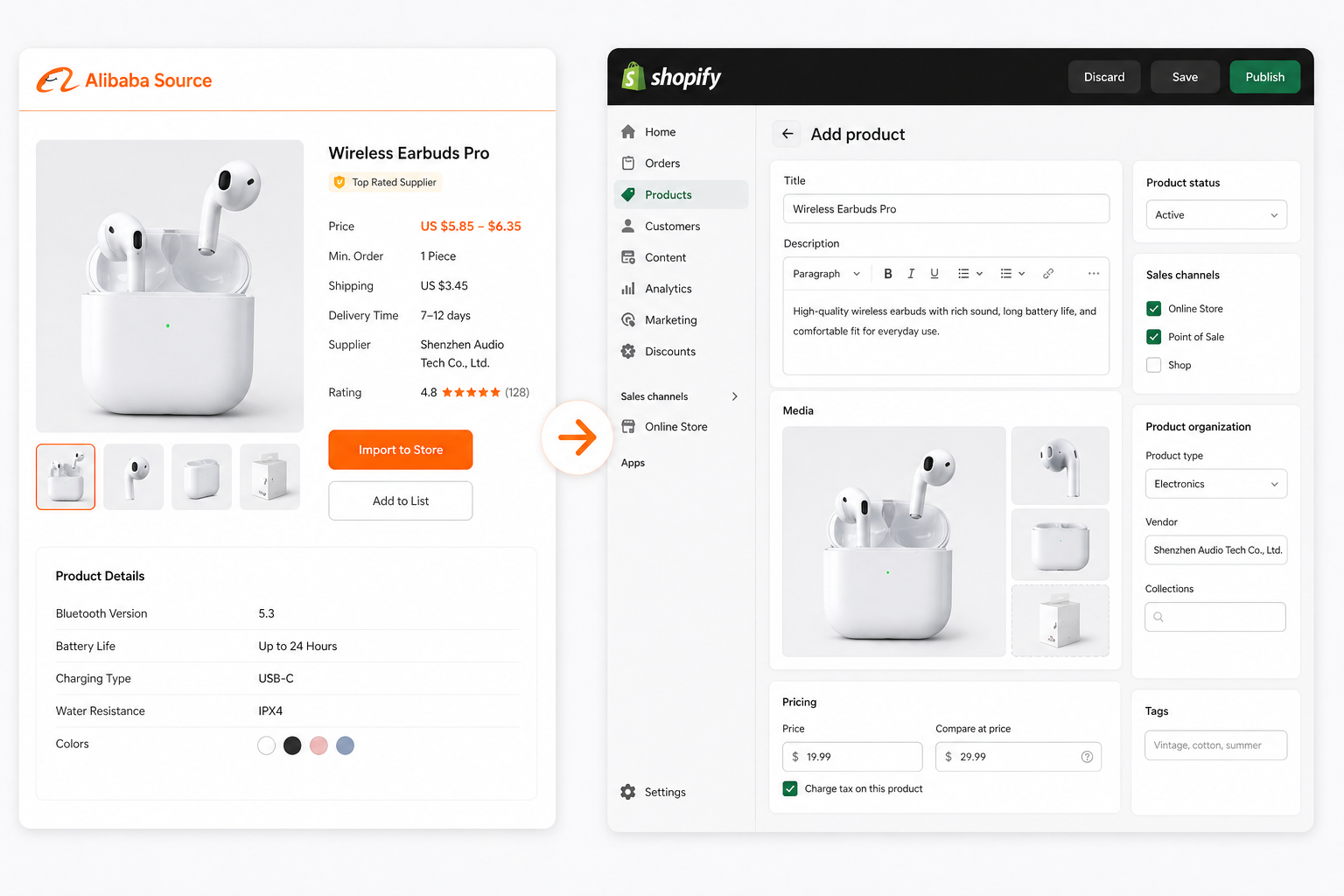
This is where Shopify store design becomes important. You can have the best products in the world, but if your store looks generic, customers will not trust it enough to buy.
The technical connection between a marketplace and Shopify is handled by a compatible connector. The current DSers Shopify listing describes support for AliExpress and Alibaba sourcing as well as product listing, ordering, and tracking synchronization. Confirm that any connector supports your exact source and fulfillment workflow before relying on it.
But the store itself still needs to look like a real brand. That means a proper homepage, clean landing pages for each product category, and campaign pages when you are running promotions.
This is where a lot of Shopify dropshippers leave money on the table. They import the product, slap it on a default theme, and wonder why the conversion rate is low. The product might be good, but the presentation kills the sale.
Tools like Canvify solve this without requiring a developer. Canvify lets you design product landing pages, campaign pages, and homepages directly in Canva, and then publish them as native Shopify pages with one click. No coding, no theme editor frustration. If you are running a dropshipping store and want your pages to look like an actual brand instead of a templated store, that is worth exploring.
The workflow for Alibaba to Shopify dropshipping looks like this:
- Create a Shopify store
- Install a compatible dropshipping connector such as DSers
- Connect the accounts and suppliers supported by that connector
- Search, verify, and import eligible products
- Edit your product listings with original copy and photos
- Design your store pages using a tool like Canvify to make them look custom-built
- Set up payment, shipping zones, and go live
How to Vet Suppliers on Alibaba and AliExpress
Supplier vetting is where most beginners cut corners and pay for it later. A bad supplier damages your store’s reputation in ways that are hard to recover from.
On Alibaba, look for these signals:
- Verified Supplier badge: This means Alibaba has confirmed the supplier’s business legitimacy through third-party verification.
- Trade Assurance: Protects your payment until you confirm the goods arrived as described. Always use Trade Assurance for your first order with a new supplier.
- Response history: Compare response speed and consistency, then test communication with specific questions before ordering.
- Gold Supplier status: Not a guarantee of quality, but suppliers who invest in Alibaba’s premium listing tend to be more serious about their business.
On AliExpress, use the available seller history, product feedback, order information, and logistics data as screening signals. They do not replace a sample order or direct confirmation of fulfillment terms.
Always order a sample before listing any product in your store. A sample order tells you the actual product quality, the packaging, the shipping time, and what the customer unboxing experience will look like. Do not skip this step.
How to Build an Alibaba Dropshipping Store That Actually Converts
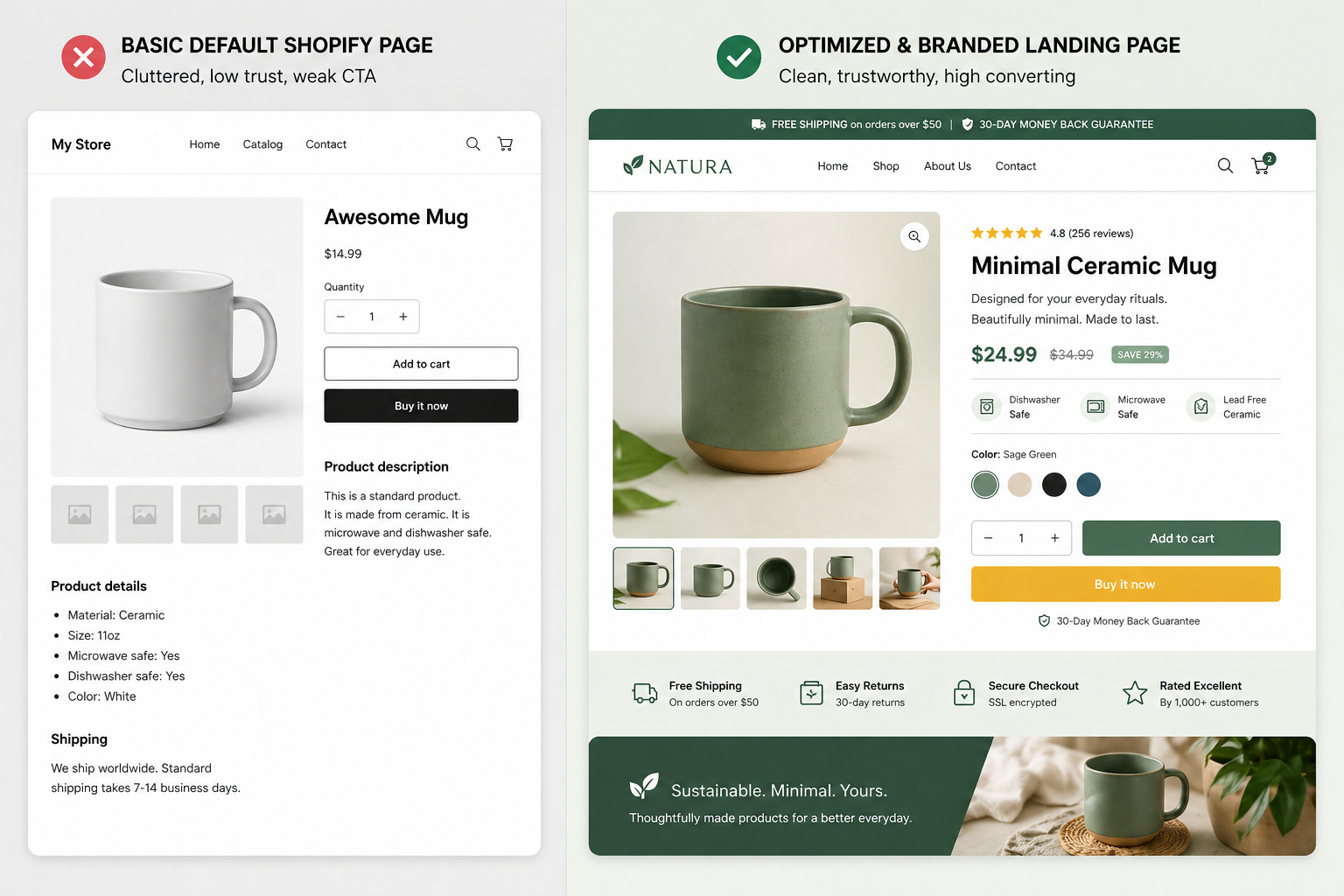
Sourcing products is only half the work. The other half is building a store that makes people want to buy.
Here is what I see separate stores that convert from ones that do not.
Product listings with original copy: Do not paste the supplier’s description directly. Rewrite it from the customer’s perspective. Address the problem the product solves. Be specific. If you are selling a back posture corrector, do not describe the materials. Describe the neck pain after eight hours at a desk.
Strong product photography: Most Alibaba and AliExpress suppliers provide usable photos, but they are rarely great. If you can get samples, photograph them yourself or hire a product photographer. If not, at least clean up the backgrounds and remove watermarks using free tools like Remove.bg.
Custom landing pages for key products: A product with strong ad spend behind it deserves its own landing page, not a default product page. A dedicated landing page lets you control the story, add social proof, address objections, and guide the buyer toward purchase.
Canvify’s template library has ready-made designs for Shopify pages you can customize in Canva and publish directly. If you are running paid traffic to a specific product, a custom landing page can give you more control over the offer and customer journey than a generic product page.
Trust signals: Display reviews (even basic star ratings), shipping estimates, and a clear return policy above the fold. These reduce friction more than any design change.
Alibaba Dropshipping on Amazon: What You Should Know
Many people ask whether Alibaba dropshipping works for Amazon. The short answer is yes, but with important conditions.
Amazon’s dropshipping policy allows you to list products from third-party suppliers, but you must be the seller of record. This means your name or business name must appear on the invoice and packaging, not the supplier’s. You cannot purchase from Alibaba and have them ship directly with their branding.
To make this work on Amazon, you either need to:
- Order inventory in bulk from Alibaba and ship it to an Amazon FBA warehouse, or
- Work with an Alibaba supplier who agrees to ship with your branded packaging and no visible supplier markings
The second option is possible but requires a strong supplier relationship and clear written agreement. If you are just starting out, focus on your own Shopify store first. It is faster to set up, easier to control, and gives you better margins without Amazon’s fees.
Final Thoughts: Building a Dropshipping Business That Lasts
The question I get most often from people starting out is not “which platform should I use?” It is “why is no one buying?”
The answer is almost always not the product. It is the store, the presentation, and the trust signals.
Alibaba and AliExpress give you access to millions of products at competitive prices. The sourcing side of this business is actually the easier part in 2026. The hard part is building a store that earns trust fast enough to convert a stranger into a buyer.
Start with AliExpress to validate products. Use the AliExpress Dropshipping Center to find what is already selling. Move to Alibaba once you have proof something works and you want to reduce costs or create a branded product line. Connect your store to Shopify and build product pages that actually look like a brand.
If you want that last part to be easier, Canvify is a practical tool. It bridges Canva and Shopify so you can design the pages yourself without needing a developer. The result is a store that looks custom-built without the custom price tag.
Start simple. Start sourcing. And build something worth coming back to.
Frequently Asked Questions
How do I begin a dropshipping business using Alibaba or AliExpress?
Create a buyer account, select a narrow product category, research demand, and confirm that each supplier supports your order volume and fulfillment model. Connect Shopify through a compatible tool such as DSers, order a sample, write original listings, and publish only after testing the complete order flow.
Does Alibaba support dropshipping?
Yes. Alibaba maintains a dropshipping marketplace, although minimum orders and fulfillment terms vary. Confirm single-item fulfillment, packaging, shipping, returns, and inventory arrangements with each supplier.
Can I use Alibaba for dropshipping on Shopify?
Yes. Use a Shopify connector that currently supports Alibaba sourcing and the automation you need. Review its current listing, connect your accounts, verify the supplier, and test product, order, and tracking synchronization before launch.
Is Alibaba or AliExpress better for dropshipping?
AliExpress is generally easier for testing products and placing single-item orders. Alibaba usually involves more supplier negotiation but can provide lower wholesale pricing and more private-label options once a product is validated.
What is the AliExpress Dropshipping Center?
It is an AliExpress product-research area, sometimes called DS Center, with product recommendations and analysis information. Availability and naming can vary by account or region; DSers also documents product recommendations from the AliExpress Dropshipping Center.
What are the best product categories for dropshipping from Alibaba?
This guide suggests categories such as home organization, portable wellness tools, pet accessories, smart-home products, eco-friendly kitchen products, and phone accessories. Treat these as research starting points and validate demand, competition, safety, shipping, and margins in your target market.
How do I find reliable suppliers on Alibaba?
Review Verified Supplier status, Trade Assurance availability, supplier history, response behavior, minimum orders, and written fulfillment terms. Message the supplier with specific questions and always order a sample before listing a product.
How do I connect Alibaba dropshipping to Shopify step by step?
Create the Shopify store, install a compatible connector, connect supported sourcing accounts, verify eligible products and suppliers, import the selected listings, replace supplier copy with original content, configure shipping and payments, and test an order before going live.
Is AliExpress dropshipping still worth it in 2026?
It can still be useful for low-inventory product testing, but profitability depends on product demand, competition, supplier reliability, delivery expectations, customer support, and honest margins. Validate those factors rather than relying only on marketplace popularity.
Where can I find trusted suppliers for dropshipping electronics?
Filter Alibaba electronics suppliers by relevant verification information and Trade Assurance, review their transaction and fulfillment history, and confirm any required certifications for your destination market. Always test an electronics sample for quality, packaging, instructions, and delivery before selling it.