AliExpress Dropshipping Guide: How to Source & Sell Products Online (2026)

On this page
Most people who want to start an online store have the same fear: spending money on inventory before they know if anyone will buy.
That is exactly the fear dropshipping was built to solve. And no platform makes that entry easier than AliExpress.
I have worked with enough ecommerce sellers to know that the “getting started” part is rarely the real problem. The problem is understanding how the whole system actually fits together. What does the AliExpress Dropshipping Center really do? How do you find products that move? What happens when a customer orders and the supplier ships slow?
This guide answers all of it. We will cover the AliExpress dropshipping account setup, the Dropshipping Center tools, how to find products worth selling in 2026, what AliExpress looks like for dropshippers in the world, and how it compares to Alibaba. We also link to our full Alibaba Dropshipping Guide if you want to explore that route as well.
Let us start from zero.
What Is AliExpress Dropshipping and How Does It Actually Work?
AliExpress is a consumer marketplace owned by Alibaba Group. It was launched in 2010 and offers products from suppliers across many categories.
Unlike Alibaba, which is built for bulk B2B purchases, AliExpress is designed for individual buyers. That makes it a natural fit for dropshipping. Most suppliers on the platform already expect to ship one item at a time directly to an end customer.
Here is how the whole model works:
- You build an online store on Shopify (or WooCommerce, eBay, Amazon, etc.)
- You import products from AliExpress into your store at a marked-up price
- A customer buys from you
- You purchase that same product from the AliExpress supplier and enter your customer’s shipping address
- The supplier ships directly to your customer
- You keep the margin between what your customer paid and what the supplier charged
You never hold stock. You only pay for a product after you have already been paid for it. That eliminates most of the financial risk that kills traditional retail businesses early.
Dropshipping remains a widely used ecommerce fulfillment model because it lets a seller validate demand before purchasing a large amount of inventory. AliExpress is one of several sourcing marketplaces used in that workflow.
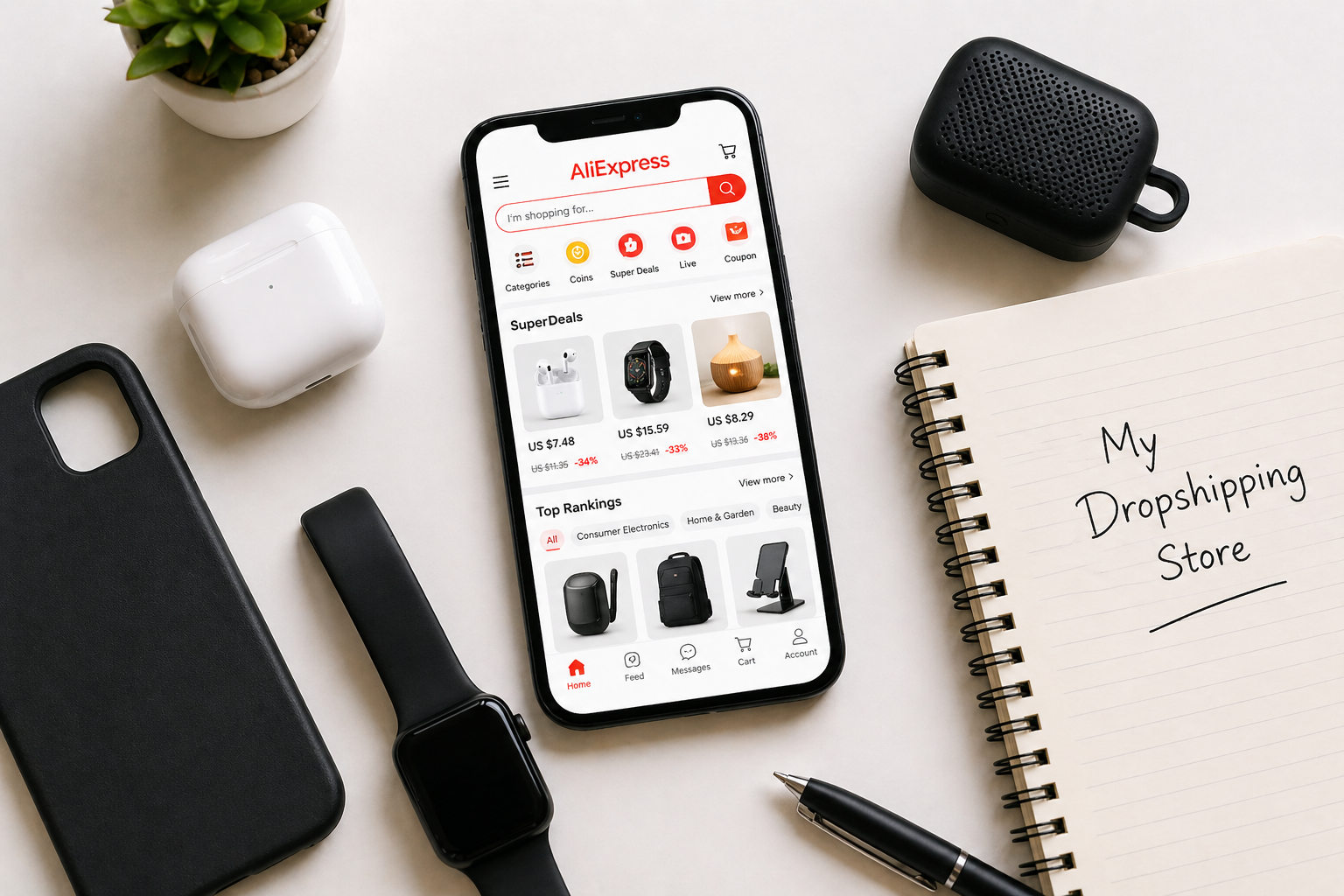
Setting Up Your AliExpress Dropshipping Account
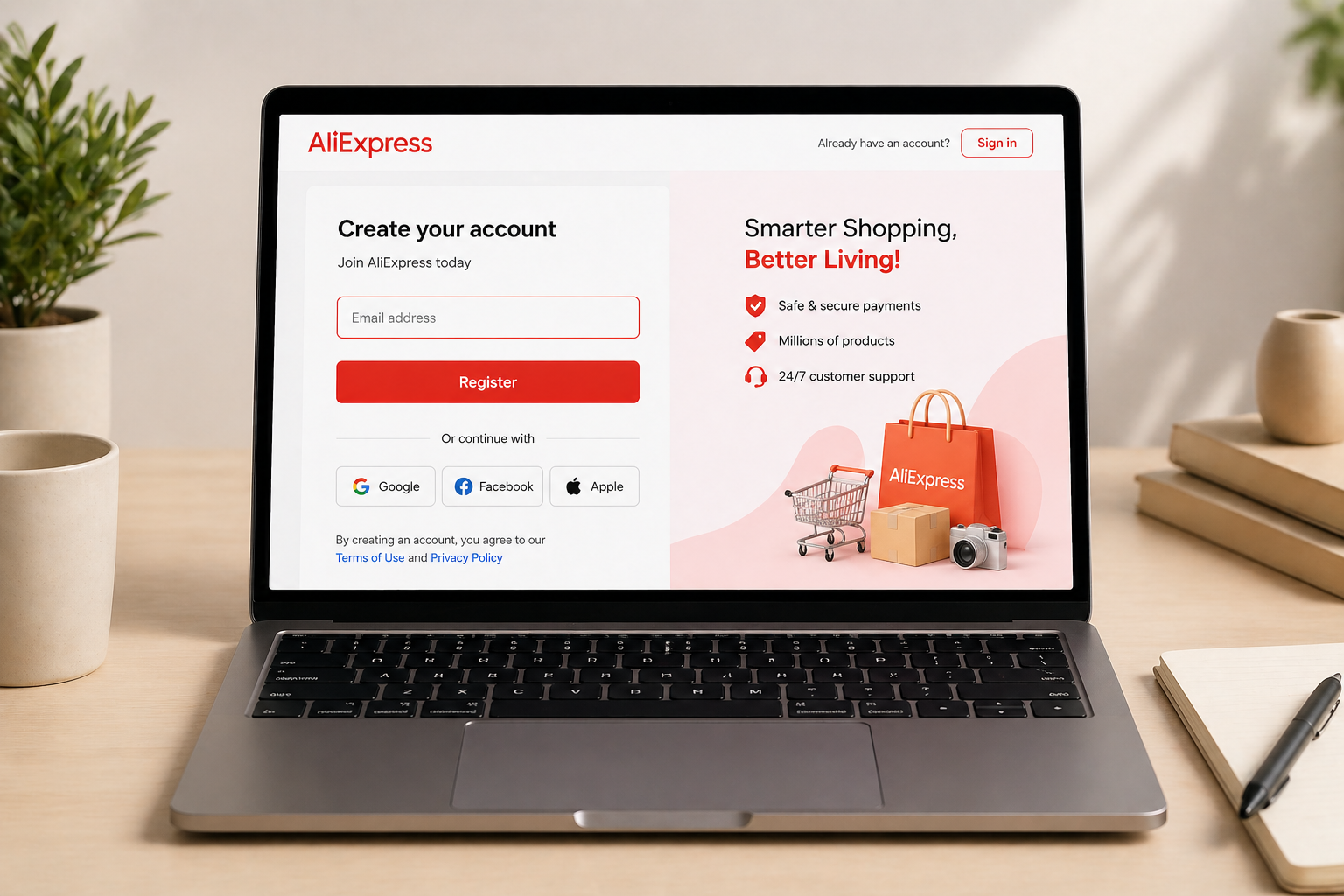
Getting started is fast. Go to AliExpress.com and click the Register button in the upper right corner. You can sign up with an email or use a Google, Facebook, or Apple ID.
Once inside, the platform gives you immediate access to browse products, supplier profiles, reviews, and shipping data. But to unlock the full dropshipping toolkit, you want to activate the AliExpress Dropshipping Center.
Here is how to get access:
Option 1: Visit the direct link. Go to ds.aliexpress.com while logged into your account. If your account is not already activated, you will see a “Join” button. Click it, agree to the terms, and you are in.
Option 2: Connect a supported app. Apps such as DSers can connect an AliExpress sourcing account to an ecommerce store. Follow the app’s current connection instructions and confirm whether Dropshipping Center access is available for your account.
Option 3: Build order history. If you place a sufficient volume of orders, AliExpress will recognize your activity as dropshipping behavior and invite you to join the center.
Once you are in, you can access the Dropshipping Center directly from your account menu or homepage. Bookmark the link because the button sometimes moves around the interface depending on updates.
Access and available features can vary by account and region, so confirm the current interface before basing a product-research process on it.
Inside the AliExpress Dropshipping Center: What It Actually Does
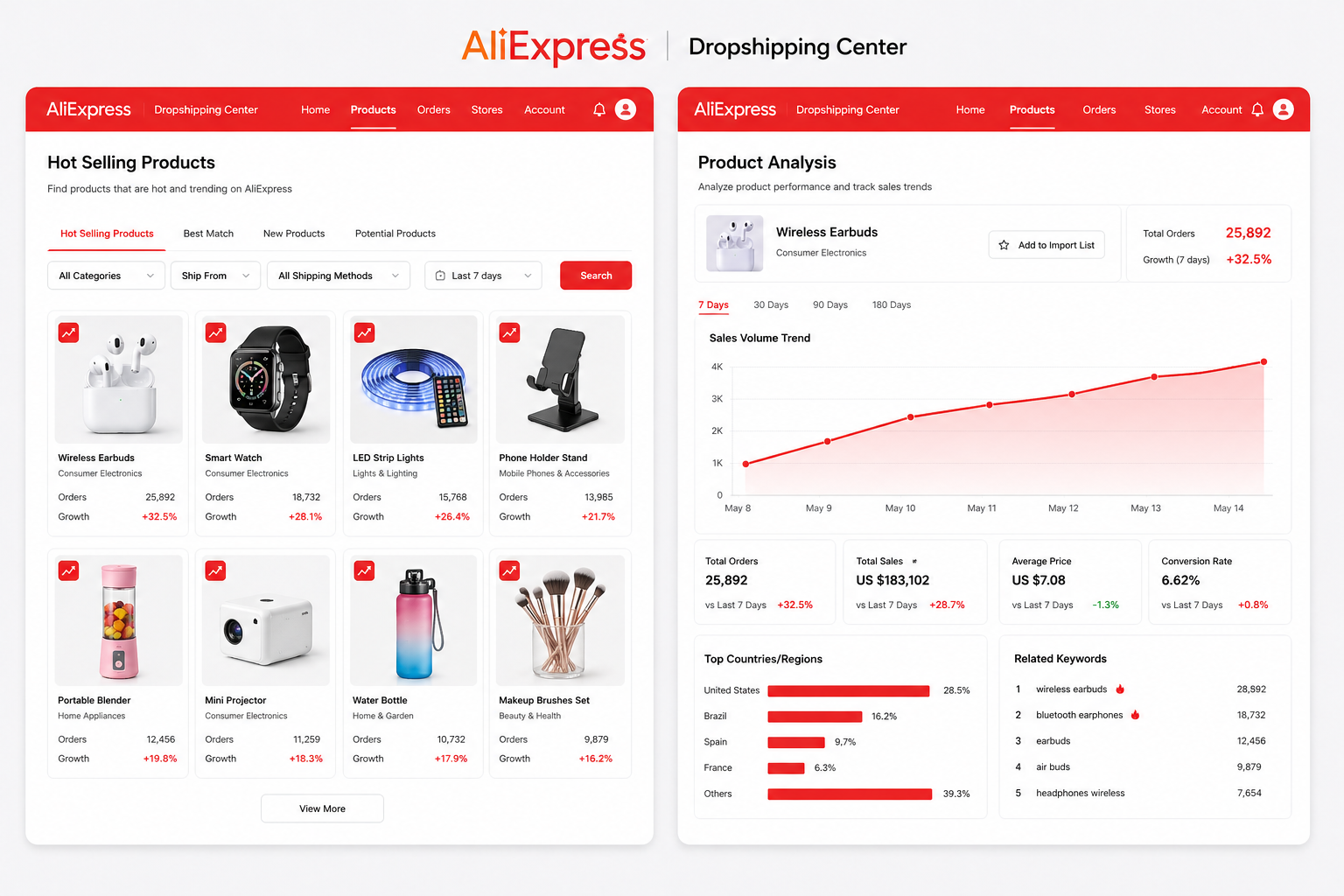
The AliExpress Dropshipping Center (also called DS Center in some interfaces) is a product-research area associated with AliExpress. Where it is available, it can provide additional discovery and listing-analysis signals.
Here is what it contains.
Find Hot Selling Products
This is the main research tool. It shows you what is actively selling on AliExpress right now, broken down by category. Each product card shows:
- Orders: Total regular orders from end consumers
- DS Orders: Orders placed by dropshippers specifically. This is the number you want to watch.
- Seller Rating: Reliability score of the supplier
- Logistics Reliability: Historical record of on-time shipping
You can filter by product category, price range, delivery country, and shipping speed. Sort by DS Orders to see what is already working for other dropshippers.
There is also a Search by Image feature. Upload a photo of any product and the tool surfaces matching or similar items from AliExpress suppliers. This is useful when you spot something trending in another market and want to find a source.
Product Analysis
Paste any AliExpress product URL into this section and get a sales volume trend graph. The graph shows how a product has been performing over the past weeks and months.
The AliExpress Dropshipping Center now automatically integrates with DSers for easier access to automation, which assists with order fulfillment, inventory items, and price tracking.
A product with a steadily climbing graph is worth testing. A product that peaked six months ago and is now declining is one to skip. Most dropshippers never check this before listing. That simple habit separates profitable operators from ones who burn money on dead products.
Sponsored Products Tab
These are paid placements by AliExpress suppliers. Not a research goldmine on its own, but worth browsing occasionally. Suppliers who pay to advertise are usually more active and more willing to work with dropshippers.
How to Find Winning AliExpress Dropshipping Products in 2026
Finding products is where most new dropshippers either overthink it or rush past it entirely.
Here is the process I recommend.
Start with the current product-discovery tools. If your account includes a Hot Selling or similar research view, filter by your niche and examine both product demand and logistics signals. Treat any score as one input rather than proof that a product will sell.
Cross-reference with Google Trends. AliExpress dropshipping works best when you combine marketplace data with external demand signals. Google Trends helps confirm whether a product has real search interest in your target market or is just moving on the platform internally. A product trending up on Google Trends and selling in DS Center is worth testing immediately.
Check Amazon Best Sellers. If a product ranks well on Amazon and is available on AliExpress at a fraction of the price, that gap is your margin opportunity. The Amazon listing also tells you exactly how buyers describe what they want, which helps you write better product copy.
Validate on TikTok. Search the product name plus hashtags like #AliExpressFinds or #TikTokMadeMeBuyIt. Products that are being reviewed, unboxed, or demonstrated by creators are already generating demand you can redirect to your store.
Top Product Categories for 2026
Categories worth researching in 2026 include:
- Smart home gadgets: Compact, tech-adjacent products that photograph well and solve specific household problems
- Pet accessories: Consistently high demand, repeat buyers, emotional purchase category
- Home organization: Storage solutions, cleaning tools, kitchen organizers
- Personal wellness tools: Portable massagers, posture correctors, wellness trackers
- Fashion accessories: Crossbody bags, jewelry, minimalist watches
- Phone accessories: MagSafe-compatible cases, car mounts, portable chargers
- Baby and kids products: Cabinet locks, bottle warmers, nursing accessories
The 3x markup rule remains the industry standard: if your supplier charges $10, you need to sell at $30 minimum to cover advertising costs, transaction fees, and generate profit. Aim for products that allow this margin comfortably.
How to Vet AliExpress Suppliers Before Listing Anything
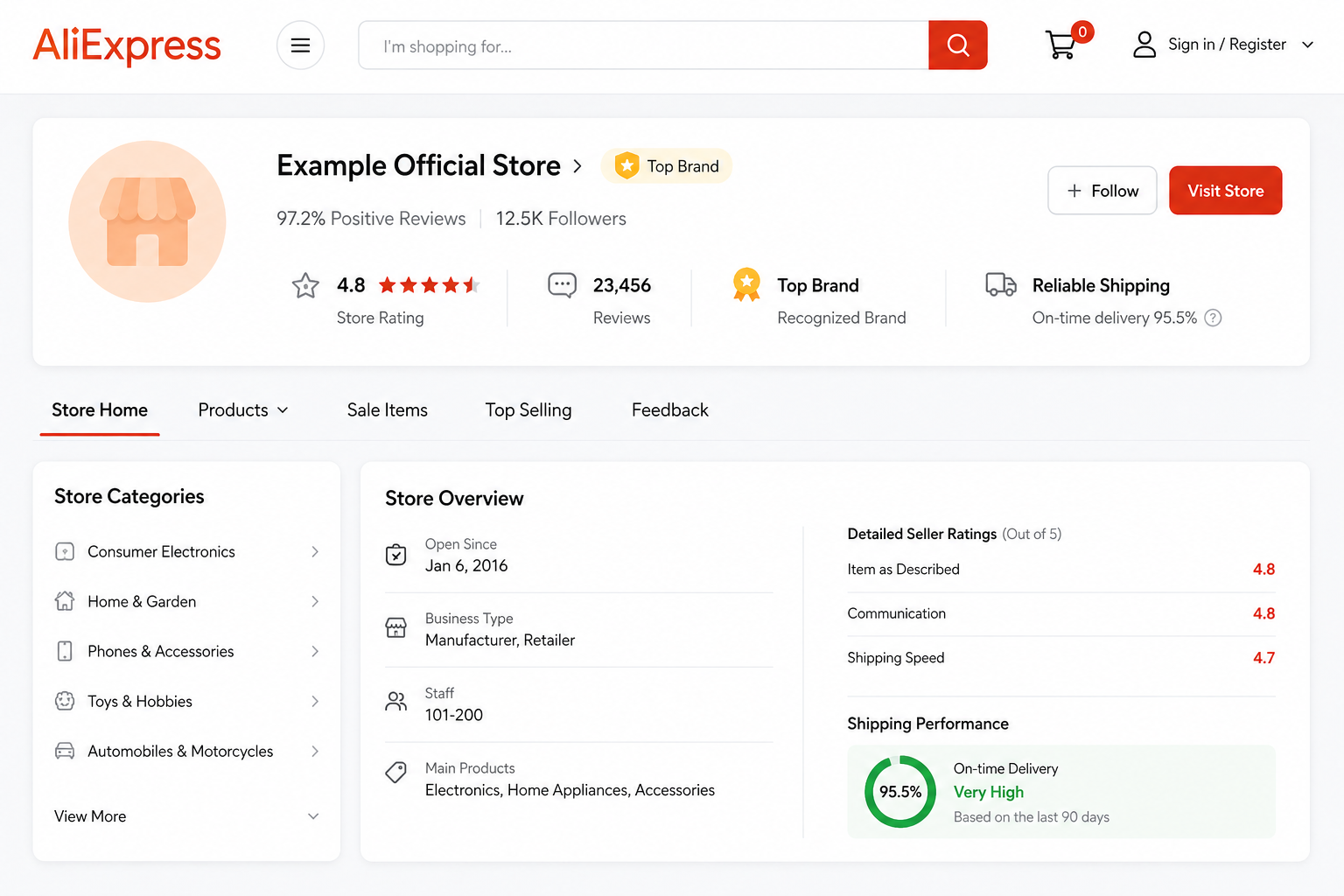
Choosing the wrong supplier costs more than choosing no product at all. A bad supplier creates chargebacks, returns, negative reviews, and frustrated customers who never come back.
Here is what to check before you list any product.
Recent seller feedback. A high positive-feedback percentage can be a useful initial filter, but read recent reviews and recurring complaints rather than relying on the headline score alone.
Available logistics signals. If the current research interface provides a logistics score, combine it with recent delivery reviews, processing estimates, tracking availability, and the destination you intend to serve.
Order history from other dropshippers. High DS Orders alongside high regular orders means the supplier is experienced with both retail customers and dropshipping workflows. That combination signals a supplier who knows what they are doing.
Communication quality. Send the supplier a message before you list anything. Ask about current processing time, promotional inserts, and neutral packaging. Prefer a supplier who responds promptly and answers the actual questions clearly.
Order a sample. This is not optional if you plan to spend any real money marketing a product. In 2026, many suppliers now include short videos in product listings, and these help you understand the real look and performance of the item. But if you are serious about quality control, ordering a sample is still one of the best ways to evaluate the product yourself.
One more thing: plan for factory and logistics interruptions around major holidays such as Lunar New Year. Ask each supplier for its cutoff and reopening dates, order samples early, and avoid promising delivery windows you have not confirmed.
AliExpress vs Alibaba: Which Should You Use for Dropshipping?
This question comes up constantly, and the answer is not one or the other. It depends on where you are in your business.
AliExpress is built for individual purchases. No minimum order quantities. Suppliers already set up for dropshipping. Automation tools that handle the entire order workflow. For beginners, this is the right starting point almost every time.
Alibaba is a B2B wholesale marketplace. Most suppliers expect bulk orders. Prices are lower because you are dealing directly with manufacturers. Custom branding and packaging are possible. But you need to message suppliers manually, negotiate terms, and confirm they will accept single-unit dropshipping orders.
AliExpress is commonly used for small, direct-to-consumer test orders, and many listings allow a single-unit purchase. That can make it a practical starting point for a business that does not want to purchase inventory before validating demand.
Here is how most serious dropshippers use both:
- AliExpress first. Test products with zero inventory risk. Find out what sells in your niche before committing to anything.
- Alibaba next. Once you have proven a product works, move sourcing to Alibaba. Lower per-unit cost, potential for custom packaging, direct manufacturer relationship.
The two platforms are not competitors. They are sequential tools in the same supply chain.
| Platform | Buyer model | Typical MOQ | Unit cost | Automation | Negotiation | Private labeling | Inventory risk | Best business stage |
|---|---|---|---|---|---|---|---|---|
| AliExpress | Consumer marketplace suited to individual orders | Usually one unit | Generally higher retail-level pricing | Supported by tools such as DSers | Limited | Limited and supplier-dependent | Low for product testing | Validation and early sales |
| Alibaba | Business-to-business sourcing marketplace | Often multiple units; supplier-dependent | Potentially lower at volume | More supplier- and workflow-dependent | Common | Commonly available by agreement | Higher when purchasing stock | Scaling proven products and custom sourcing |
For a full breakdown of how Alibaba dropshipping works, what the Alibaba Dropshipping Center does, and whether Alibaba delivers to your country, read our complete Alibaba Dropshipping Guide.
Connecting AliExpress to Your Shopify Store with DSers
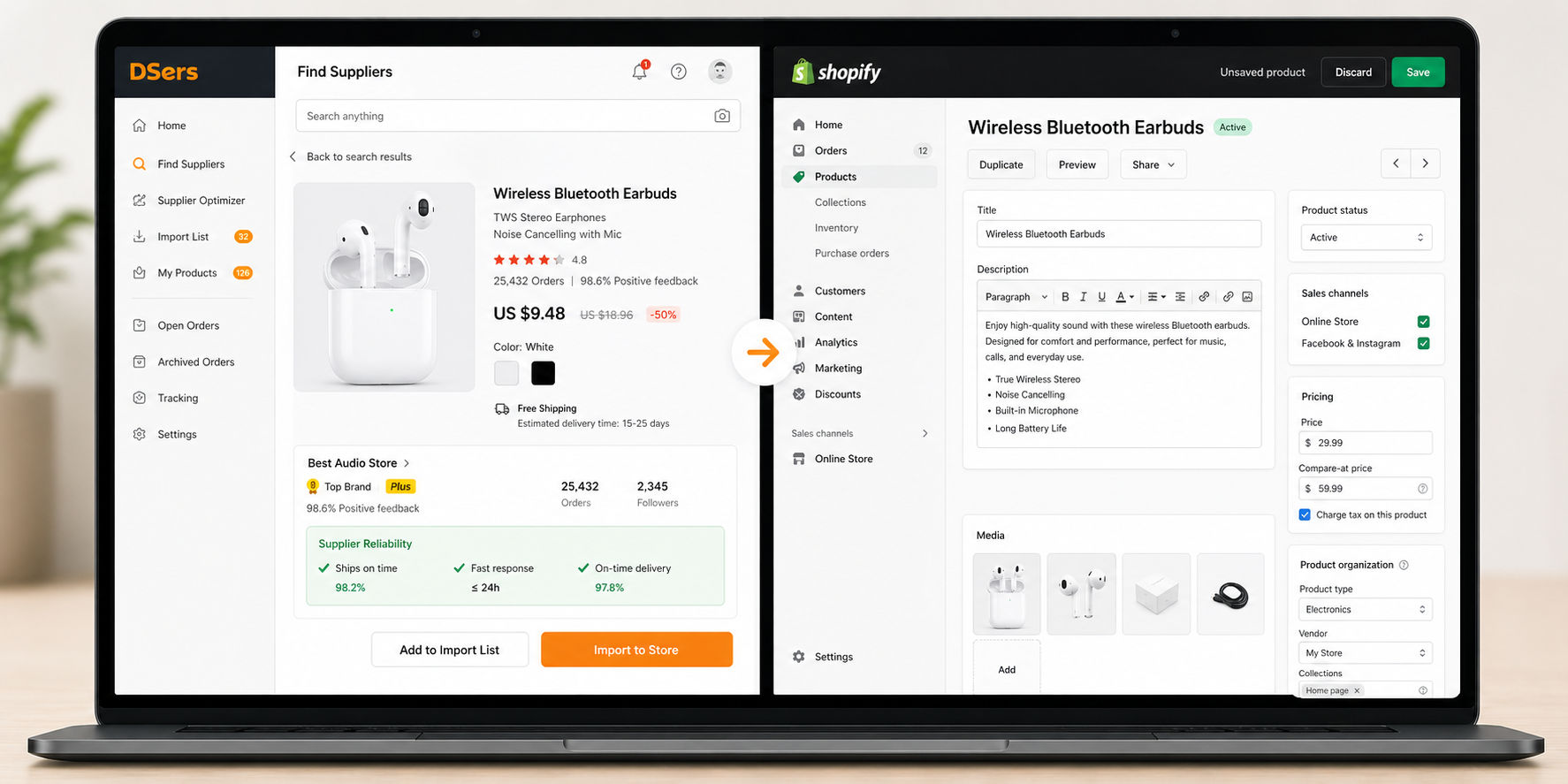
DSers is an order-management app that connects AliExpress sourcing with ecommerce platforms including Shopify. Its current fulfillment documentation describes order processing and tracking synchronization; check its current plans before choosing a workflow.
Here is the basic workflow:
- Create a Shopify store
- Install DSers from the Shopify App Store
- Connect your AliExpress account to DSers
- Browse AliExpress through the DSers interface and click Import to push products into your store
- Edit product titles, descriptions, and prices before going live
- When a customer orders, go to DSers and click Place Order. It auto-fills the customer’s address in AliExpress.
- DSers syncs tracking numbers back to Shopify automatically
Manual order handling becomes harder as volume grows. DSers provides bulk order tools and can synchronize tracking information after a supplier ships, reducing repetitive work. Payment and supplier fulfillment still require attention, so review the order status rather than assuming the whole process is hands-off.
One critical mistake I see constantly: copying the AliExpress product description directly into the Shopify store. The original descriptions are usually written in broken English, focused on specs rather than benefits, and identical to every other store selling the same product. Rewrite every listing in your own words. Speak to the customer’s problem. That alone will separate your store from 90% of the competition.
Why Your Store Design Matters More Than Your Products
Most dropshippers obsess over finding the perfect product. But I have watched stores with mediocre products outperform stores with great products, simply because one looked like a real brand and the other looked like a template.
When someone lands on your product page after clicking an ad, they make a trust decision in under three seconds. If your store looks generic, the conversion rate punishes you immediately.
This is especially true for AliExpress dropshipping because the products themselves are not exclusive. Multiple stores are selling the same item. The customer picks the store they trust more.
What makes a store feel trustworthy:
- Clean, consistent visual design that matches the niche
- Original photography or lifestyle images (not the supplier’s packshot on a white background)
- Clear shipping policy visible without scrolling
- A branded homepage that tells a story
- Product landing pages designed specifically for the item, not just default product templates
That last point is where a lot of stores leave money on the table. A generic product page tells people nothing. A dedicated landing page can tell the full story, handle objections, show social proof, and push people to the buy button.
Tools like Canvify make this easier without requiring a developer. You design the page in Canva (which most people already know) and Canvify converts it into a native Shopify page with clean HTML. The result looks custom-built without the custom price tag.
If you are running any paid traffic to a product, build it a proper landing page first. The increase in conversion rate will usually pay for itself within the first week of ads.
For design templates you can use as a starting point, the Canvify template library has options built specifically for Shopify pages. Pick one, customize it in Canva, and push it live.
Shipping, Returns, and Managing Customer Expectations
Shipping time is a common concern with marketplace dropshipping. The estimate varies substantially by the supplier, origin warehouse, destination, carrier, and product.
Here is how experienced dropshippers handle this.
Be transparent on your product pages. Publish a realistic range based on the current estimate for the product and destination, then explain processing time separately. Do not reuse a generic shipping promise when the supplier or warehouse changes.
Compare the currently available tracked methods. Shipping options vary by product, supplier, warehouse, and destination. Compare the displayed delivery estimate, tracking coverage, and total landed cost for the actual customer location instead of relying on one carrier name for every order.
Look for suppliers with a suitable local warehouse. Some listings offer inventory closer to the customer. Confirm that the selected product variant actually ships from that warehouse and use the current checkout estimate rather than promising a fixed delivery window.
Use an order tracking app. Install a tracking integration like AfterShip or TrackingMore on your Shopify store. Proactive shipping updates reduce customer service emails dramatically.
AliExpress supplier return policies vary. Review the applicable listing and platform protections, but publish a customer-facing return policy your own business can honor even when the supplier’s policy differs. For a damaged, missing, or incorrect item, document the issue and choose the clearest refund or replacement resolution for the customer.
Final Thoughts: What Actually Separates Profitable AliExpress Stores
The dropshipping graveyard is full of stores that had decent products and no customers. And it is full of stores that had customers but terrible suppliers. And full of stores that had both but no brand.
AliExpress is not a shortcut. It is a sourcing channel. The business is still yours to build. You still need to choose products carefully, market them with intention, and build a store experience that earns trust on the first visit.
What I see working consistently in 2026: niche stores that solve a specific problem for a specific audience. Not general stores trying to sell everything. A pet store for dog owners. A home organization store for small apartments. A wellness store for remote workers. Each one draws a specific buyer, builds trust faster, and generates repeat purchases.
AliExpress gives you access to the products. The Dropshipping Center gives you the data to choose wisely. DSers gives you the automation to fulfill without burning out. The remaining variable is the store itself and how it presents what you are selling.
If you want to make that part count, build pages that look like they belong to a real brand. Canvify is a practical way to do that without starting from scratch or hiring a designer. Design in Canva, publish to Shopify. That is it.
Start with one product, one niche, one audience. Get one sale. Then optimize from there.
Frequently Asked Questions
Is AliExpress dropshipping still profitable in 2026?
It can be profitable for a focused store, but using AliExpress does not guarantee a margin. Results depend on product demand, landed cost, supplier reliability, delivery expectations, customer acquisition costs, and how well the store converts visitors.
How do I set up an AliExpress dropshipping account?
Create an AliExpress buyer account, research products and suppliers, and connect a compatible order-management app if you want a more automated Shopify workflow. Confirm the app's current setup requirements before importing products.
What is the AliExpress Dropshipping Center and how does it work?
The Dropshipping Center is a product-research area associated with AliExpress. Where it is available, sellers can use it to explore products and analyze listing performance. Its availability and interface can change, so use current platform documentation alongside the workflow described in this guide.
What are the best AliExpress dropshipping products in 2026?
There is no universal winning category. Start with products that solve a recognizable problem, are economical to ship, have room for a sustainable margin, and are supported by reliable suppliers. Validate demand and competition before listing them.
Is AliExpress or Alibaba better for dropshipping?
AliExpress is generally easier for small, single-item tests, while Alibaba is oriented toward business sourcing, negotiation, and larger or customized orders. Sellers often test demand through AliExpress before exploring lower-cost or private-label sourcing through Alibaba. See the Alibaba dropshipping guide for the second workflow.
Can I dropship from AliExpress to Shopify automatically?
Apps such as DSers can assist with importing listings, placing orders, and synchronizing fulfillment information between an AliExpress workflow and Shopify. Review the app's current plan and feature details before relying on a particular automation.
How do I find reliable AliExpress suppliers for dropshipping?
Examine recent feedback, order history, delivery estimates, tracking options, and communication quality. Ask about processing time and packaging, then order a sample to inspect the product and delivery experience yourself.
What shipping method should I use for AliExpress dropshipping?
Choose a tracked method with a realistic estimate for the customer's destination. Compare the available carrier, warehouse location, total landed cost, and recent delivery feedback for each listing rather than applying one shipping method to every order.
How do I handle returns with AliExpress dropshipping?
Publish a customer-facing return policy that you can honor independently of the supplier. Document damaged or missing orders, communicate with the supplier through the platform, and decide whether a refund or replacement gives the customer the clearest resolution.
What is the difference between AliExpress and the AliExpress Dropshipping Center?
AliExpress is the marketplace used to find and order products. The Dropshipping Center is a research tool associated with the marketplace; where available, it adds product-discovery and analysis features but is not required to place an order.
How many products should I start with in an AliExpress dropshipping store?
A focused initial catalog of roughly five to ten related products is easier to test, explain, and support than hundreds of unvalidated imports. Expand only after learning which products attract qualified traffic and convert.